Backup Power and Building Resilience: What Liberty Harbor Residents Should Know
Liberty Harbor | Jersey City Living Guide | Summer 2026
Power infrastructure isn’t something most apartment residents think about until they need to. Then it becomes the thing they think about constantly.
This guide covers what modern high-rise apartment buildings actually do to maintain power during disruptions, what residents should realistically expect when a backup system activates, and how Liberty Harbor approaches the communication and response side of these situations.
How Backup Power Works in Modern Apartment Buildings
Modern high-rise residential buildings are required by building code to maintain backup power for a defined set of critical systems. The specifics vary by state and building type, but in New Jersey, the requirements for residential high-rises generally include: emergency lighting in stairwells and common areas; fire suppression systems; at least one elevator; emergency communication systems; and sewer ejector pumps.
That list tells you what the law requires. What a well-run building actually provides is often more than that. Many modern residential buildings, including those built under updated New Jersey commercial building codes, have backup systems designed to maintain basic habitability, not just emergency egress.
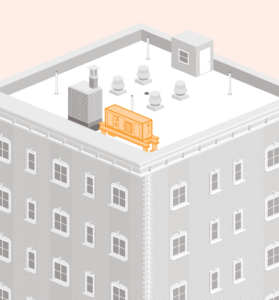
The most common backup system in urban residential buildings is a standby generator: a fixed or temporary power source that activates automatically when grid power is lost. These systems range from partial-load generators that serve only critical systems to full-building systems that maintain elevator service, corridor lighting, and, in some cases, apartment-level power throughout an outage.
What Generators Actually Do in a High-Rise, and What They Don’t
A common misconception is that a building generator keeps everything running the way grid power does. It doesn’t, and understanding the difference helps set realistic expectations.
What a typical residential building generator covers:
- Emergency lighting in stairwells, corridors, and exit routes
- At least one elevator (required by code in buildings above a certain height)
- Fire alarm and suppression systems
- Security systems and access control
- Water pressure pumps in buildings that rely on electric pumping.
What a partial-load generator typically does not cover:
- Individual apartment power outlets, lighting, appliances, unless the building has a full-load system
- HVAC and climate control in residential units
- In-unit laundry or kitchen appliances
The scope of coverage is a meaningful question to ask of any building you’re considering. A building that can tell you specifically what its backup system covers is one that has given serious thought to its infrastructure.
A well-run building treats backup power as a resident communication issue as much as a technical one. What residents need during a disruption is information: what’s covered, what isn’t, and when normal service will resume.
Building Resilience at Liberty Harbor: What the Infrastructure Is Designed For
Liberty Harbor’s residential buildings are built for real urban life, not just to check boxes. Backup power here isn’t just code-compliant, it’s designed to keep things running when it matters.
The management team is on-site, not dialing in from elsewhere. When something goes wrong, they’re already here and ready to act.
We keep electrical and mechanical systems in shape with regular inspections and licensed contractors. Preventive maintenance is the rule, not the exception.
What Residents Should Know About Power Disruptions and How Buildings Respond
Power outages in city apartment buildings come in two forms: grid events and building-specific events.
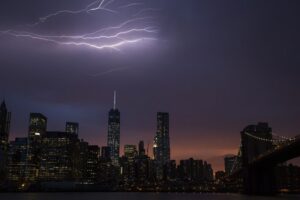
Grid events hit the whole service area, usually thanks to storms, utility failures or demand spikes. PSE&G, which serves Jersey City, posts real-time outage maps and restoration timelines at outage.pseg.com. When the grid goes down, your building’s backup system steps in to keep the essentials running until the utility brings power back.
Building-specific events are a different story. Electrical faults, equipment failures or planned maintenance can knock out power in just one building or even a single section. In these cases, the building’s maintenance and management team handles the fix, usually with help from a licensed electrician.
For residents, it comes down to who you call and how long you’ll wait. Grid events run on the utility’s schedule. Building events are up to your management team. The best management teams make it clear which situation you’re dealing with and lay out the plan for each. That’s what matters most.
Noise, Duration, and Communication: What to Expect During a Backup Power Event
Industrial generators are loud. That’s not a surprise, it’s just how they operate.
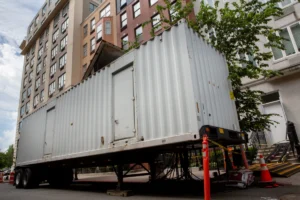
A generator’s noise depends on its size, where it sits and how it’s enclosed. Small units tucked into mechanical rooms are much quieter than big portable ones parked near homes. When buildings invest in permanent, enclosed backup systems, residents notice the difference when it matters.
Duration matters too. An hour of generator noise during a quick storm is annoying. Days of it during major repairs is a real habitability issue. Good management teams treat it that way, keeping residents informed, supported and clear on the repair timeline.
At Liberty Harbor, the on-site team keeps residents in the loop during any extended outage, using building-wide updates and direct outreach to those most affected. No one is left guessing what’s happening or what comes next.
How Liberty Harbor Keeps Residents Informed During Infrastructure Events
For residents, communication is the real test of infrastructure management. Technical know-how is table stakes. Trust comes from transparency.
Here’s how Liberty Harbor handles infrastructure disruptions:
- Acknowledge disruptions quickly and specify which systems are down.
- Keep residents in the loop with clear updates on repair timelines and what to expect.
- Reach out directly to those most affected.
- Offer real support, alternate accommodations, rent adjustments or other solutions if the disruption drags on.
This approach exists for a reason. Most frustration isn’t about the disruption itself; it’s about being left in the dark. Communication won’t fix pipes faster, but it does make the wait bearable.
Power disruptions are an inevitable part of urban living; in any city, any building, any waterfront community. The difference between a disruption that leaves residents feeling abandoned and one that leaves them feeling supported comes down to infrastructure quality, management responsiveness, and communication clarity.
At Liberty Harbor, all three of those are part of how the community operates. If you have questions about how the buildings are equipped or how the management team handles infrastructure issues, the leasing and on-site team will provide direct answers.
Explore more lifestyle tips on the Liberty Harbor blog.