Moving to Jersey City: A Local Guide for New Residents — From the Team at Liberty Harbor
Liberty Harbor | Jersey City Living Guide | Spring 2026
Jersey City used to be the backup plan when Manhattan rents got out of hand. Now, people choose it for the neighborhoods, the food, the parks, the easy commute, and a real sense of community you don’t always find in bigger cities.
Thinking about moving? Here’s what living in Jersey City actually looks like, which neighborhoods to check out, and what to expect in your first few weeks.
Why People Are Moving to Jersey City
The numbers tell part of the story. Jersey City is growing fast. Hudson County keeps adding people, thanks to rents that are still lower than Manhattan, real neighborhood feel, and steady investment in infrastructure.
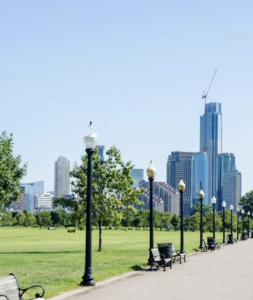
Ask people why they stay, and the answers get personal. Outdoor space comes up a lot. Liberty State Park, the Hudson River Waterfront Walkway, and a handful of smaller parks give you room to breathe, something rare in a city this dense. Food is another big reason: you’ll find old-school Latin American and Indian spots near Journal Square, plus new farm-to-table places downtown. And of course, there’s the commute. More on that soon.
Ask anyone who’s been here a few years why they stayed, and you’ll hear some version of the same answer: it wasn’t the commute or the rent. It was the neighborhood.
There’s also a practical dimension to consider. For many households, especially those moving from Brooklyn, the Upper East Side, or Hoboken, Jersey City offers more space for the dollar without sacrificing proximity to the city.
Getting to Know the Neighborhoods
Jersey City isn’t one-size-fits-all. Each neighborhood has its own vibe, so finding your spot really comes down to what matters most to you.
Downtown and the Waterfront
Downtown is home to the highest concentration of new residential buildings, restaurants, and easy transit. Exchange Place, Paulus Hook, and the waterfront corridor all anchor this part of the city. The Hudson River Waterfront Walkway runs through here, drawing locals for morning runs, evening walks, and weekend outings with family or dogs.
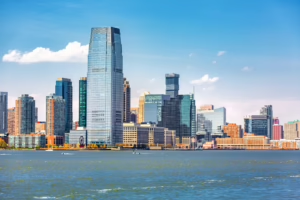
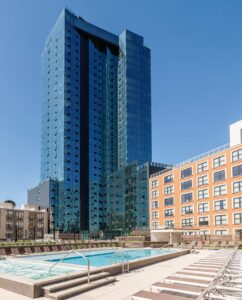
This is also where Liberty Harbor sits. Liberty Harbor sits at the southern edge of downtown, bringing together new apartments, an active events calendar, and direct access to the light rail and ferry. It’s a clear example of how the waterfront has grown into a self-sufficient community, offering daily essentials and sweeping views of Manhattan and the Statue of Liberty.
Journal Square
Journal Square is one of the city’s most transit-rich areas. PATH trains run frequently to Midtown and Downtown Manhattan, and the surrounding neighborhood has undergone significant change over the last decade. It’s more affordable than the waterfront, more diverse, and increasingly home to a creative and professional community alongside long-established businesses and restaurants.
The Heights
The Heights sits up on the Palisades, with sweeping views and a main stretch along Central Avenue that’s easy to walk. It’s quieter than other parts of town. Getting into the city means catching a bus or hopping on the light rail, so it works best if you don’t need to commute daily.
Bergen-Lafayette
South of downtown, Bergen-Lafayette stands out for its history and constant change. Artists and young families are moving in, looking for bigger apartments, lower rents, and easy access to Liberty State Park. If you like seeing a neighborhood in motion, this is one to watch.
Commuting from Jersey City
Jersey City’s commuting options are a real advantage, and something you’ll want to understand before signing a lease.
The PATH train gets you from Journal Square or Grove Street to the World Trade Center in about 10 to 15 minutes, and to Midtown around 25. It runs all day, every day, which is a real edge over most NJ Transit options.
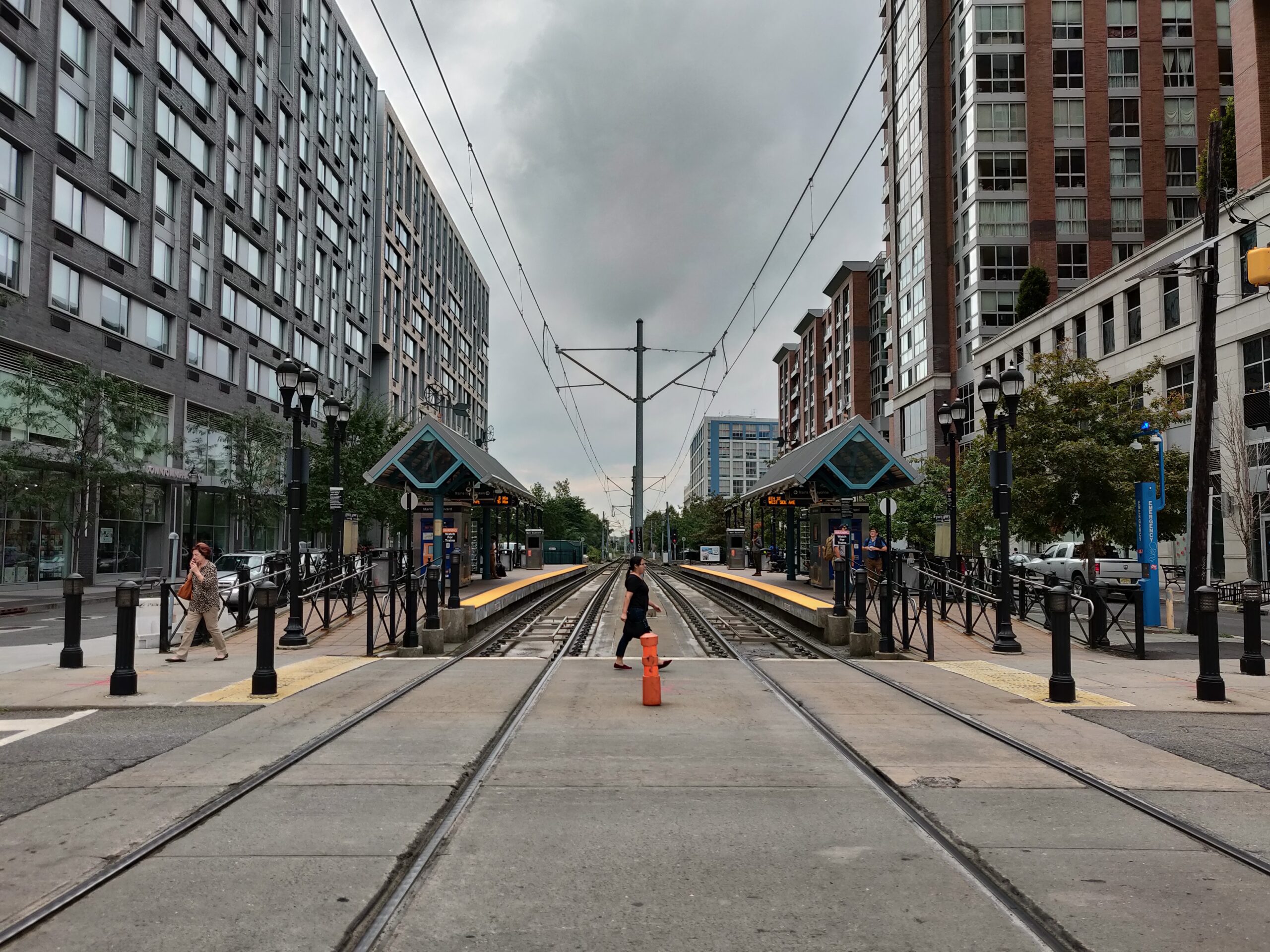
The Hudson-Bergen Light Rail runs up the waterfront, linking Bayonne, Harborside, Exchange Place, and more to Hoboken Terminal, where you can catch NJ Transit trains or ferries. If you work in Midtown or on the West Side, this route can be even more convenient than the PATH.
NY Waterway ferries are another option, especially if you want a quick, scenic 10-minute ride to Midtown. Some waterfront neighborhoods, like those near Liberty Harbor, have direct ferry access, which makes mornings a lot easier.
Cyclists have more options now, too. Jersey City’s protected bike lanes keep growing, and Citi Bike covers most of downtown. A lot of people mix biking with the PATH or ferry for their daily commute.
Waterfront Living — What It’s Actually Like
Waterfront life in Jersey City isn’t the same as living a few blocks back. It’s worth knowing what you’re signing up for before you make the move.
The views are the real deal. If you’re along the Hudson, you’re looking straight at Manhattan, and you can spot the Statue of Liberty from plenty of spots on the southern end. Sunsets over the skyline? That’s just part of the routine.
The lifestyle has shifted a lot. Now, weekend farmers markets, outdoor yoga, food trucks, and community events are just part of the waterfront routine. A few practical things to know: the wind off the river in winter is no joke, and parking near the PATH can be tough. Grocery options depend on your exact building; some spots have everything close, others mean a quick trip. If you rely on transit, check the walk to your actual station, not just the neighborhood as a whole.
A Few Things to Know Before You Move
Longtime Jersey City residents will tell you there are a few things you won’t find in any apartment listing.
- The PATH works, but rush hour is packed. Give yourself an extra ten minutes; trust us, it helps.
- Street parking downtown and by the waterfront is tough. If you have a car, double-check your building’s parking before you sign anything.
- Jersey City’s food scene is solid, but don’t expect a classic main street lineup. The best places are often hidden in neighborhoods you wouldn’t think to visit at first. Get curious and explore.
- Near the waterfront, winter and spring feel colder and windier than inland. Invest in a real coat, you’ll thank yourself later.
- Community here is real, but you have to show up for it. People who join building events, neighborhood groups, or even a local run club settle in faster.
Your First 30 Days: A Practical Checklist
Moving to a new city comes with its own set of logistics. Here’s a checklist we’ve found helpful for keeping things simple and stress-free:
- If you have a car, make sure to register it with the New Jersey DMV within 90 days of settling in.
- Update your driver’s license with your new address.
- Register to vote at your new Hudson County address.
- Find your closest PATH station and do a practice run of your commute before your first day at work.
- Scout out the nearest grocery store, pharmacy, and urgent care. Knowing where to go saves time later.
- See if your building has package lockers or a mail room. Every building handles deliveries a little differently.
- If you’ll be using transit or biking, download the NJ Transit and Citi Bike apps early on.
- Check out the Jersey City Parks Department calendar. Liberty State Park, for example, offers free events all year.
- Find a local café or coffee shop to call your own. It’s a small thing, but it helps the neighborhood feel like home.
- If your building offers community events, try to show up at least once in your first month.
That last one isn’t just about logistics, it’s about experience. Jersey City has a way of rewarding anyone who explores it with a bit of curiosity.
If you’re pulled toward the waterfront, the southern end of downtown, think Liberty Harbor, right by the light rail and ferry, makes settling in a bit simpler. No matter where you end up, though, the basics hold true: sort out your commute early, walk the neighborhood, and give yourself a few months before making up your mind.
Most folks who move to Jersey City find themselves sticking around longer than they expected.
Explore more lifestyle tips on the Liberty Harbor blog.